
Get a Quote
Get a Quote
An array commissioned in 2004 is still metered every month. Here is what two decades of that data says about degradation.
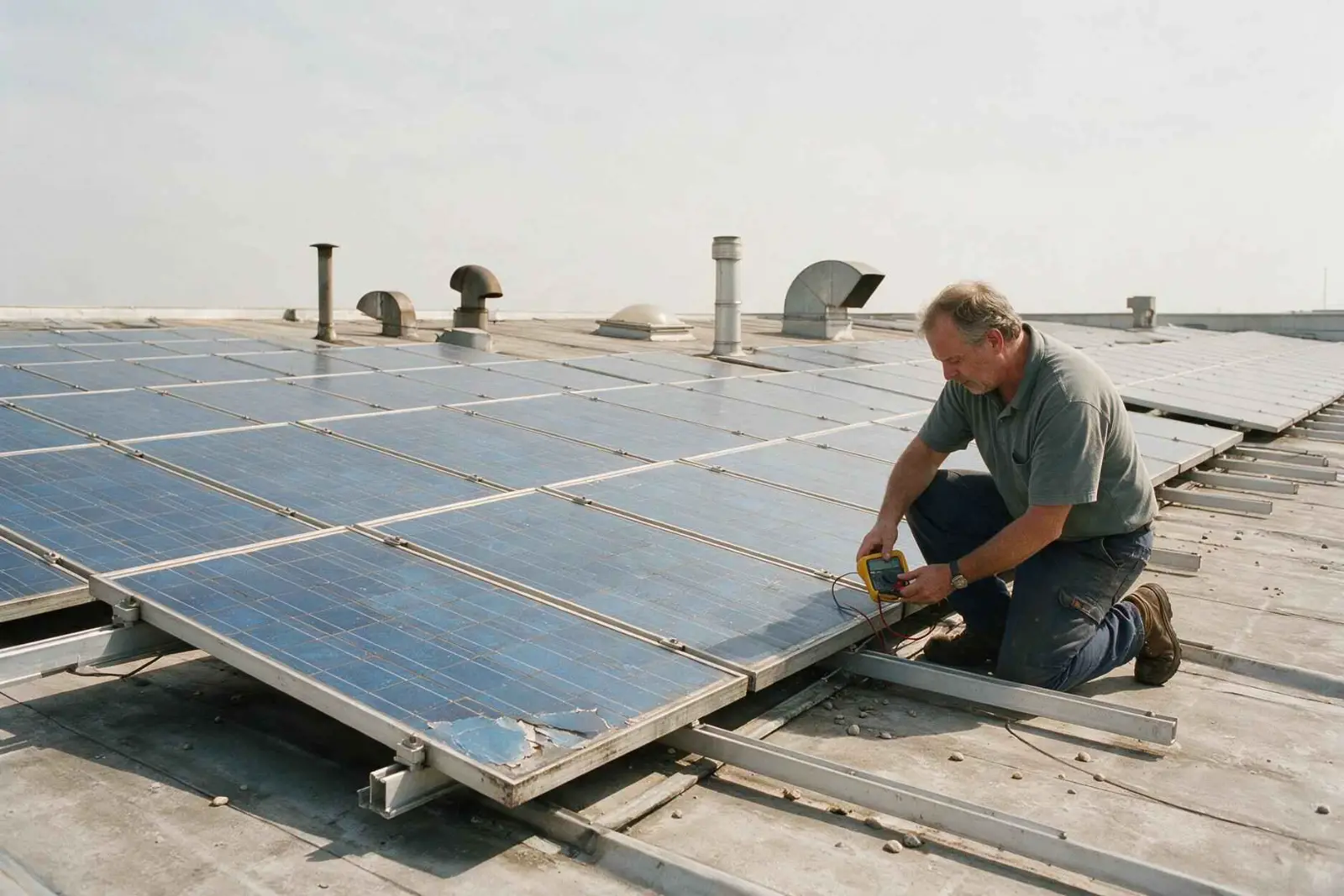
The array went up in 2004 on a warehouse roof outside Salem. It has been metered without a gap since, which makes it the longest continuous production record we hold.
Twenty-two years of monthly reads let us check degradation against the number the modules were sold on rather than the number the industry quotes.
Measured degradation sits at 0.42% a year against a 0.5% warranty line. The array is producing 91% of its first full-year output, which is above where the datasheet put it.
The losses that matter are not in the modules. Two string inverters were replaced in year eleven, and a single mis-set combiner cost more energy in one summer than degradation has cost in a decade.
One mis-set combiner cost more energy in a single summer than module degradation has cost in a decade.
.svg)

